


Finding the right A-Level Economics Tuition can be frustrating; after all, there’s anxiety in knowing that your choice will shape how your child learns economics.
You want to ensure your child has every advantage. But the number of options available makes it difficult to distinguish between a centre that teaches and one that simply repeats a textbook.
As a tuition centre ourselves, we’ve worked with hundreds of students. We saw firsthand the methods and the type of environment that these young minds thrive in.
Our a level economics tuition guide for 2026 provides a checklist on what to look for when choosing a JC econs tuition. It focuses on what leads to long-term academic success, genuine confidence in the subject, and, more importantly, sociopolitical awareness of current events.
Key Takeaways
- Effective tuition prioritises the application of theories to real-world events over simple rote memorisation of definitions.
- You should look for a centre that offers flexible learning modes, such as hybrid and on-demand classes, to suit your child’s schedule.
- Proprietary resources, like annual model essay booklets, are better indicators of success than generic textbooks.
- A tutor’s ability to take a student from a failing grade to an ‘A’ is a more reliable measure of teaching skill than a high A/B rate alone.
- The ideal learning environment must be physically conducive to focus, featuring proper acoustics, lighting, and ventilation to prevent student burnout.
What Proper A-Level Economics Tuition Does for Your Child
Effective A-level economics tuition does more than just help a student memorise definitions.
The subject requires critical thinking and the ability to apply abstract theories to real-world scenarios.
When tuition is done correctly, your child should start to see the world differently. They should be able to look at a news headline about inflation and explain the underlying economic drivers.
This level of understanding is what leads to top grades. The proper tuition engages your child with economics and its real-life application—with improved grades being one of the many byproducts of this newfound love for economics.
Beyond the grades, proper support nurtures an environment where your child can ask questions they might be too shy to ask in a large lecture theatre. This confidence-building will allow them to excel in their classrooms and in their social dynamics.
What Parents Should Look for in A-Level Economics Tuition
The JC economics tutor or centre you choose will determine your child’s learning experience. Depending on the quality of education, the tuition centre might just be the reason your child loves economics, or is indifferent to it.
You should be looking for a programme that offers a practical and engaging approach to the subject. Use the following criteria to evaluate any centre or tutor you are considering.
Learning Modes
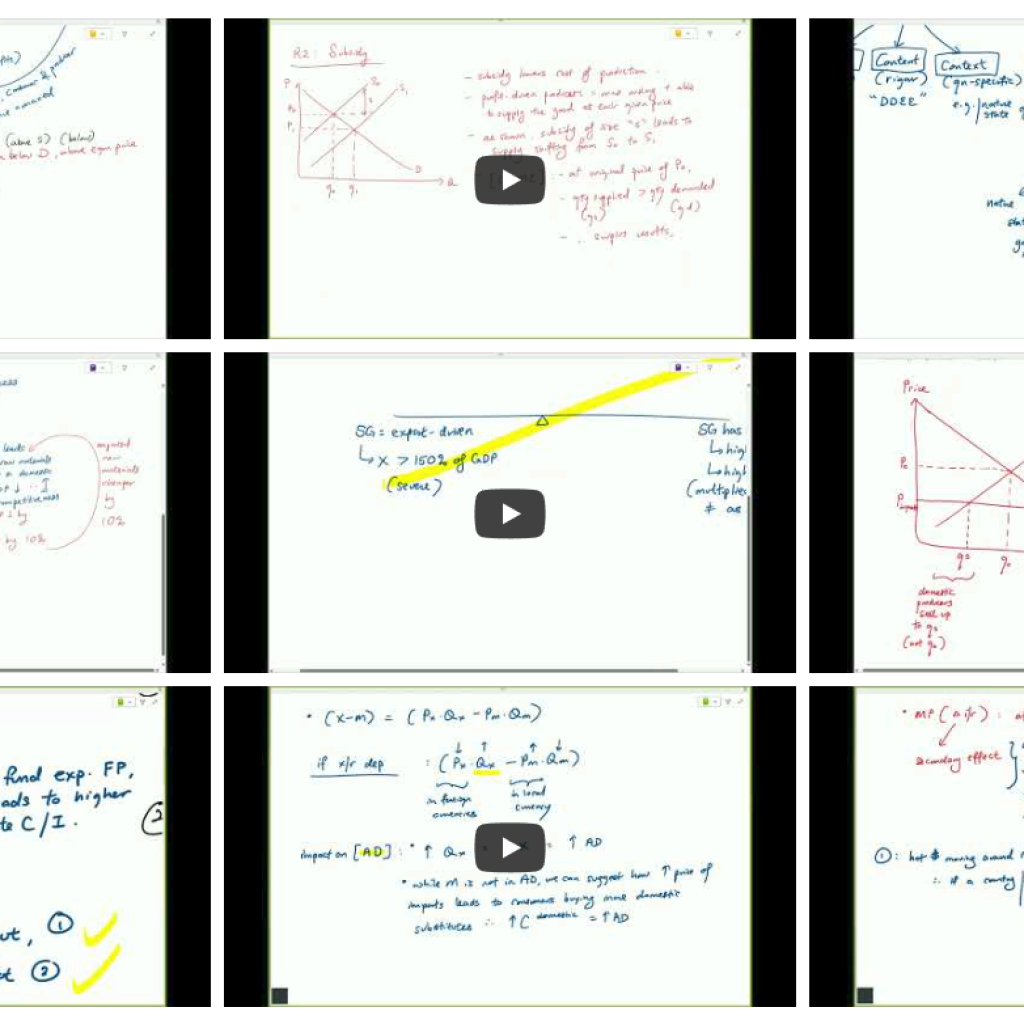
A good tuition centre should offer a variety of ways to access the material. These ways will incluide:
- Physical classes for those who benefit from face-to-face interaction
- Online options for those who need to save time on travel
- Hybrid classes for those who need the convenience of online classes, and the close-knit community of physical classes
- On-demand classes for more asynchronous learners who thrive at their own pace
We find that a hybrid approach often works best. This allows students to attend in person when they can, but also gives them the option to join a live stream or watch a recorded session if they are unwell or have school commitments.
Ask for the learning modes the tuition centre adopts. This will help you gauge their flexibility with their teaching methods.
Also, ask if the centre provides recordings of every lesson. This is an invaluable resource for revision and improvement, as it allows your child to revisit difficult topics as many times as they need.
Available Textbooks & Resources
The quality of the learning materials indicates the effort a tutor puts into their craft.
Excellent A-Level econs tuition centres should provide proprietary resources.
Look for concise summary notes, model essay booklets, and case study workbooks that are updated annually. You’d want updated workbooks, since the A-Level examinations change every year.
You’d want your child to have access to a knowledge bank that they can refer to during their intensive revision periods. These textbooks and resources, though they shouldn’t be your child’s only source of information, are an excellent supplement to the provided teaching.
A/B Rate
While results are not the only thing that matters, they are undeniably important.
A high percentage of students achieving A and B grades is a good sign, but you must look deeper than just the numbers.
Ask if these results are consistent over several years. A good year might be down to a particularly bright cohort, whereas consistent success suggests a robust and effective teaching method.
However, you should also be wary of centres that only take in top-performing students to keep their averages high. A truly skilled tutor is one who can take a student from a “U” grade to an “A”. Ask for stories of such progress, as these demonstrate the real value of the tuition. Which brings us to our next point:
Reviews
Look for authentic reviews from both parents and students. Look for testimonials that mention the tutor’s ability to explain difficult concepts, their responsiveness to questions, and the quality of their feedback.
The most reliable reviews are those from students, as they are the ones experiencing firsthand how the tutor engages them with concepts of, let’s say, price elasticity.
It’s also students who can juxtapose their struggles with their current schooling against the tuition centre’s methods—so you’ll likely hear stories such as a student going from a C to an A.
Read the reviews to see if they mention an improvement in the student’s interest in the subject. When a student starts to enjoy Economics, their grades naturally follow. If you see recurring mentions of a tutor being patient and engaging, it is a strong indicator that you are looking at a programme that tailors itself to each individual student.
Be wary, however, if the reviews are on the website. The website is likely to cherry-pick its student testimonials. Be sure to go through Google Reviews as well to get a more unbiased idea of the tuition centre’s performance.
Pedagogy
Pedagogy refers to the method and practice of teaching.
This determines the tuition centre’s philosophy and approach to moulding students with concepts.
Is it a one-way lecture where the tutor talks and the students take notes? Or is it an interactive session where students are challenged to think?
Does the tuition centre speak about a proprietary teaching method that they’re experimenting with?
A standard pedagogical approach is the Socratic method, in which teachers ask questions to guide students to the answer rather than just giving it to them. It emphasises and brings out critical thinking within the class. This ensures each student actually understands the logic behind the theory, which is crucial for the H2 Economics paper.
Here at ThatEconsTutor, we apply the Parachute Concept Approach, in addition to the innovative pedagogical approaches. Through this approach, we give students a broader, bigger-picture perspective on how Economics concepts tie into one another before diving into each specific concept.
Physical Environment
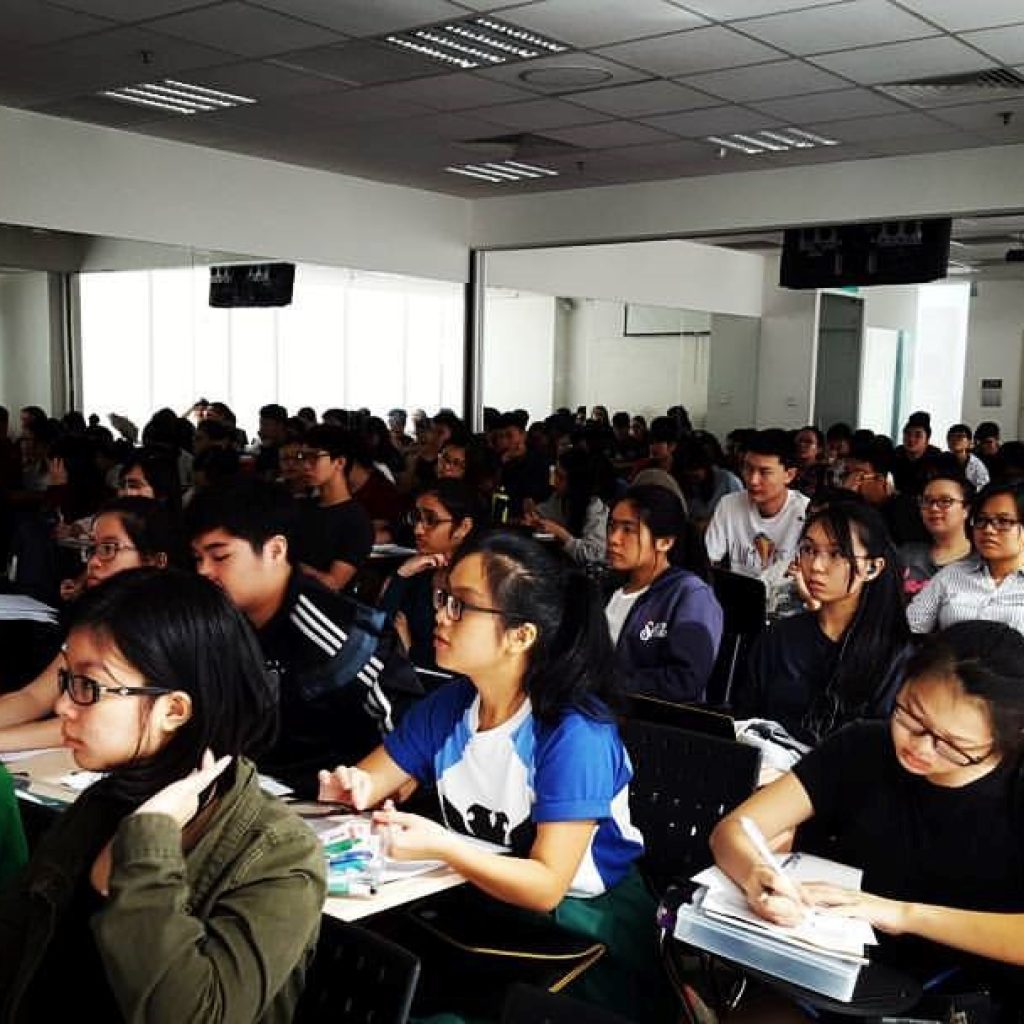
The space where your child learns has a direct impact on their ability to concentrate.
You should look for a centre with a conducive learning environment. It should feel like a place of study, not a crowded or noisy room. As such, look for study chairs and tables. Assess if the lighting is faulty or dim, as poor lighting can result in sleepiness and a lack of engagement.
How are the acoustics? Does sound from the outside ring through the walls and distract the students?
Are the rooms air conditioned? Poorly ventilated rooms can be stuffy and may hinder students’ focus.
While the tuition centre’s layout doesn’t need to be fancy, it should be clean and well-maintained.
Facilities
Beyond the classroom, what else is offered?
Good tuition centres invest in facilities that support learning. This could include a library of reference books, access to printing services, or a pantry.
In the digital age, facilities also include the online infrastructure. Is there a student portal where they can download materials? Is there a dedicated system for online classes? These facilities make the administrative side of learning easier, allowing your child to focus entirely on their studies.
Tutors
The person standing at the front of the classroom is the most critical factor.
You need to know who will be teaching your child.
A great tutor is also a great communicator. They should be able to build a rapport with students, and explain the lesson in an engaging, relatable manner. Economics tutors should be able to hook students in with storytelling—and trust us, there are plenty of opportunities to weave stories at a mall or grocery store with macroeconomics.
A good way to gauge tutors is through their teaching methodology and educational attainment, among other factors. You can find this information on the A-level econs tuition centre’s website.
Trial Lesson
The best way to gauge a tuition centre is through a trial class. It’s one thing to assess a centre based on their reviews and their website, however, it’s a completely different thing for your child to experience a class first-hand.
Every student has a different learning style, and a tutor who works well with one student might not work well with another. Also, a centre that might seem stellar on paper might not be as engaging when it comes to the actual class.
A trial is the best way to see if the “vibe” of the centre matches your child’s personality and needs.
Why Quality of Education Matters More than A/B Rate
It is easy to get caught up in the pursuit of an “A” grade.
However, you must realise that a grade is a byproduct of quality education, not the sole goal. If a student is coached only to pass an exam through rote memorisation and spotting questions, they are at a disadvantage when they reach university.
Quality education focuses on building a foundation of knowledge. When a student truly understands economic principles and how they marry together, they don’t need to spend hours memorising answers. They can think on their feet.
This intellectual flexibility is what distinguishes a top-tier student.
Furthermore, the pressure to achieve a certain grade can often lead to burnout. A quality tutor focuses on the student’s well-being and growth as a learner. They encourage curiosity and help the student develop a sense of mastery over the subject. When a student feels competent, their motivation increases, and the “A” grade becomes a natural result of their hard work rather than the main goal.
Get in Touch with a Learning-Committed A-Level Economics Tuition Today
Choosing the right support for your child’s A Level journey is a significant decision. You need a partner in education who is as committed to your child’s success as you are. By using this checklist, you can make a choice based on what actually works.
We believe that every student has the potential to excel in Economics if they are given the right tools and guidance. Here at ThatEconsTutor, our approach is built on instilling genuine passion for the subject. Through our Parachute concept, we give students the broader picture so they can better understand the finer details.
After all, Economics is a machine in which the cogs of supply and demand, government policies, and consumer psychology determine price. We want to help students understand how each of their lessons has an impact on the way they live—connecting them to real-world news and events.
We don’t just prepare students for an exam; we prepare them to think critically about the world they live in.
If you are looking for a programme that ticks all these boxes, get in touch with us today. Your child deserves a learning environment that is focused on genuine understanding.
Frequently Asked Questions
How many students are typically in a JC economics tuition class?
Class sizes vary between centres, and it depends highly on the experience and teaching style of the tutor.
Is it better to start tuition in JC1 or wait until the JC2 prelims?
Starting in JC1 is generally recommended because the foundation for H2 Economics is built early.
How much time should my child spend on Economics outside of tuition hours?
We suggest at least an hour of consistent weekly revision to review tuition notes and practice essay outlines to ensure the concepts stay fresh.
Will the tutor provide feedback on school assignments and common tests?
Some tutors would be happy to review schoolwork. This helps them identify areas where your child might be struggling with regard to the school’s marking rubrics.
How do I know if my child is actually improving before the final A-Level results?
You should look for signs of progress, such as increased class performance. However, also look out for improvements in their personal lives, such as an increased awareness of world news.