



Searching for a top economics tuition centre in Singapore can feel like reading a CSQ extract with too much noise and not enough clarity. Every centre claims distinction rates, every billboard promises mastery, and every WhatsApp testimonial sounds glowing. The real differentiator sits underneath the marketing, in the teaching quality, marking depth, consultation access, and revision support that quietly turn a B grade into an A.
When it comes to tackling rice shortage, for example. Extreme weather conditions disrupted harvests across traditional exporters such as Thailand and Vietnam.
There’s also rising input costs (the costs that go into manufacturing and exporting rice) due to ongoing geopolitical tensions in Europe and the Middle East.
Seasonal weather and global conflict push rice prices higher, raising the cost of a basic human necessity. So different governments enacted policies to help preserve their people’s standard of living.
To shield domestic producers and pursue food self-sufficiency, Indonesia enacted import bans on rice to be more resilient amid these supply chain disruptions. They relied on state stockpiles to buffer the transition.
Meanwhile, as a major importer vulnerable to supply chain volatility, the Philippines faced a different challenge. To stabilise the market, the government enacted retail price ceilings to keep rice affordable.
Tuition centres will explore case studies such as these, tackling supply and demand, prices, the role of government, and market behaviour, among others. They aim to help improve students’ understanding of the world; often hypothesising on how they can make it better.
This is exactly why seeking supplementary assistance is paramount for many students.
For students to enjoy these discourses, the tuition centre must leverage the social sciences’ compelling nature to capture students’ interest. They must also be able to imbue a desire for problem-solving, as is the struggle with any math undertaking.
Why students often choose the wrong centre
Combining these two areas of critical thinking can be unlike any other subject students have encountered up to that point. As such, choosing the right centre will be paramount to understanding economics.
However, students may end up choosing an unoptimal centre for the following reasons:
Choosing based on convenience or branding alone
Just because a tuition centre is right next to your MRT station or has branding or imagery that resonates with you doesn’t mean it’s the right fit for your learning style.
In Economics, we call this Asymmetric Information: a scenario where the seller has all the information about their product’s true quality, and you, the consumer, have to decide based on surface-level marketing.
Your choice of tuition centre can determine how much fun you’ll have venturing into economics, and whether or not you’ll retain meaningful information. As such, it helps to practice scrutiny and be investigative when weighing your options.
This could mean conducting deeper research on the tutors or reviewing the centre’s performance over previous years.
Why a strong centre should improve exam performance
In your first few weeks of school, you’ll learn about scarcity: resources are limited, but human wants are infinite.
Your time during these pre-university years is a scarce resource. The centre you choose must deliver a high return on investment by translating your time and effort into higher exam percentiles.
Teaching factors that matter most
At the heart of any tuition centre is the classroom experience. Economics isn’t a subject you can simply memorise and regurgitate like a history timeline. The way a tutor delivers a lesson determines whether or not you’ll grasp the lesson and find the subject meaningful.
Clear explanation of concepts and application
A top-tier tutor needs to make abstract concepts feel real.
For instance, when they teach you the Price Mechanism (how supply and demand determine the price of everything, from chicken rice to iPhones), they shouldn’t just read definitions off a slide.
They should show you how real-world shocks, like a sudden shortage of raw materials, shift the supply curve and push prices upward.
Memorisation can fatigue students and make them uninterested. However, when concepts are tied together through storytelling, as economics very often has the potential to do, you’ll become more engaged with the material and better understand, not just the topic, but also how the world works around you.
Strong essay and case study training
Economics exams are split into two major components: Essays and Case Study Questions (CSQs).
CSQs present you with real-world data, such as news extracts regarding global Inflation or unemployment rates, and ask you to dissect them.
A good centre does not just hand you model answers to memorise; they teach you structural frameworks so you can tackle any data thrown at you.
Instead of reproducing answers you’ve memorised, you’ll be thinking critically, solving, and hypothesising various outcomes from the CSQ. You’ll also be able to translate this thinking into cohesive writing.
Ability to teach evaluation properly
To score an ‘A’ grade, you must master Evaluation (EV), which is the act of judging a policy’s real-world success.
Suppose a government passes a tax to fix a Market Failure. For example, a carbon tax to reduce pollution and improve sustainability. An analytical student will assess: “The tax increases production costs and reduces output.”
However, an evaluative student will argue: “On balance, because energy demand is highly price-inelastic in the short run, the tax might initially just increase government revenue rather than significantly cut down pollution levels.”
It is practically impossible for the government to accurately measure the exact monetary value of climate damage. If the tax is set too high, it unnecessarily harms economic growth; if it is too low, the market failure persists.
If Singapore’s carbon tax is significantly higher than that of neighbouring countries, multinational carbon-intensive corporations might relocate to countries without a carbon tax. The emissions simply move elsewhere, while Singapore loses GDP growth.
A great tutor will teach you to analyse and connect various moving parts, as well as social and environmental impact, so that you can write with these nuanced judgments in mind.
Support factors students should check
What happens after the weekly two-hour lesson ends is just as important as the lesson itself. The support ecosystem around the classes determines how quickly you close your learning gaps before major tests.
Quality and speed of feedback

You cannot improve your economics writing style unless someone actually marks your work. Look for a centre that offers personalised marking.
For instance, let’s say you’re struggling with a Case Study Question (CSQ) on a sudden spike in global crude oil prices. You conclude with “the government should implement a price ceiling to keep oil affordable for firms and consumers.”
A proper tuition centre won’t just cross that out and write “Wrong policy.”
Instead, they will promptly guide you through the following likely considerations:
- Deconstructing the Context: The tutor highlights that crude oil is a primary industrial input with a highly price-inelastic demand.
- Tracing Unintended Consequences: The tutor shows how a price ceiling creates a shortage. They help the student realise that oil wouldn’t just be cheaper, it would disappear from the market, grinding factories and transport networks to a halt.
- Redirecting to Social Optimality: The tutor then walks the student through alternative interventions, such as a production subsidy or a strategic reserves release, showing how to evaluate which policy minimises deadweight loss while preserving supply stability.
Availability of consultations
During your economics undertaking, you’ll come across concepts or questions in the formal schooling that you might not immediately understand. Or perhaps you’ll hear about government policies on the news, and you’re looking for insights from your tutor.
Check whether the centre offers 1-to-1 consultation slots (either via Zoom or face-to-face) or at least a dedicated messaging line where the tutor answers your conceptual doubts.
If the tuition centre provides that kind of support outside the classroom, then it is dedicated to its students’ learning.
Access to revision materials and timed practices
School lecture notes can be overwhelmingly thick. A solid tuition centre provides condensed “cheat sheets” and drill books that can freshen students’ minds at a glance. The goal of this material is to make revision more time- and effort-efficient, rather than going through the textbook chapter by chapter.
Tuition centres should also conduct regular timed practices so you can conquer your exam time-management anxiety.
Plenty of tuition centres are also using video lessons as learning material, allowing students to revisit and recap on previous lessons.
If your tuition centre provides this supplementary material, you’ll be in good hands.
Practical factors worth comparing
Beyond pure academics, logistical and financial realities play a massive role in whether a tuition centre is sustainable for you.
Though they aren’t indicative of the curriculum and potential learning, they play a massive part in indirectly shaping your learning experience. These include the following considerations:
Class size and lesson pace
Having 30 or more students might create an energetic, highly social environment, but it may lead the tuition centre to adopt a more blanket approach rather than a more intimate, focused pedagogy.
Alternatively, micro-groups (3 to 12 students) offer close individual attention and can move at a faster, more intense pace, since the tutor is waiting on fewer people to catch up.
Having a smaller class allows the tuition centre to apply a more tailored approach to each student. Also, since this allows the curriculum to move faster, having a smaller class will better serve its purpose as a supplementary measure to traditional schooling.
Schedule, location, and attendance consistency
Your school schedule will be packed with CCAs, leadership roles, and project work.
If a centre is located an hour away from your school or home, you’ll be allotting a significant portion of your day to your supplementary learning. The required commute will eat into time that could have been spent on school commitments, unwinding, leisure, or sleep.
Look for locations near major transport hubs or near your daily routine locations (e.g., school).
Also, check if they offer flexible make-up classes if you miss a session due to school events.
Fees and value for money
Economics tuition in Singapore is a meaningful investment, with monthly group rates typically ranging from S$320 to S$600 depending on tutor seniority, class size, and bundled resources. One-to-one rates can run higher, often between S$80 and S$150 per hour.
Don’t simply choose the cheapest option. Weigh the value:
- Does the fee include complimentary marking of extra school papers, comprehensive textbooks, and full access to a digital resource library?
- Does the venue offer air-conditioning and a distraction-free environment?
The tutor’s expertise also comes into play, as tuition centres with higher costs are likely to hire more experienced (and therefore higher-salaried) tutors.
How to tell whether a centre fits you
Every student starts their Economics journey at a different baseline. A tuition centre that is perfect for a student struggling to pass might feel frustratingly sluggish for a top-scoring student aiming for a distinction.
Signs that it suits weaker students
If you are currently feeling completely lost in school lectures, look for a centre that focuses on foundational clarity. Signs of a good fit include:
- Step-by-step breakdowns of basic graph drawing.
- Simple real-world analogies (e.g., comparing international trade to trading snacks in a school yard).
- Heavy emphasis on mastering basic economic definitions.
Signs it suits stronger students aiming for an A
If you already understand the content, you need a centre that pushes your boundaries.
Look for advanced masterclasses that skip basic definitions and dive straight into high-level evaluation frameworks, structural secrets, and the analysis of complex, current global economic crises.
Though in application, we get a range of students of varying skill levels in our classes. Regardless of whether you feel you’re lagging behind your lessons or if you’re already confident in your abilities and want to push yourself further, our small class sizes allow us to apply unique approaches to these different levels of students.
When to keep looking instead of enrolling
If a centre relies on high-pressure sales tactics (“If you don’t join our crash course today, you will fail your exams”) or refuses to let you view their materials before signing up, keep looking. Your education is too important to rush into.
You can also hold off on enrolling based on gut feeling. If something feels off, something probably is. If a tuition centre’s marketing were transparent and thorough, you should feel confident in your choice to choose them, rather than reluctant.
A pre-enrolment checklist
Before you officially sign the registration form, run through this quick strategic checklist to make sure you are making a calculated choice.
Five things to confirm before joining
Before committing your scarce revision time to any programme, ensure you get clear answers to these five elements:
- Does the tutor personally conduct the lessons and mark your scripts?
- Is there an established system for booking personal consultation slots?
- Are lesson recordings available for revision and makeup purposes?
- Do the notes provide concise summaries?
- Can the tuition centre show verified grade improvements across various junior colleges?
One mistake students should avoid
The biggest error you can make is delaying your enrolment until the preliminary examinations. Waiting too long reduces the time you have to practice to raise your grades, which can result in hasty procrastination and stress. Seeking help early ensures you have ample time to master the subject, preventing a stressful scramble right before the final papers.
FAQ
Author
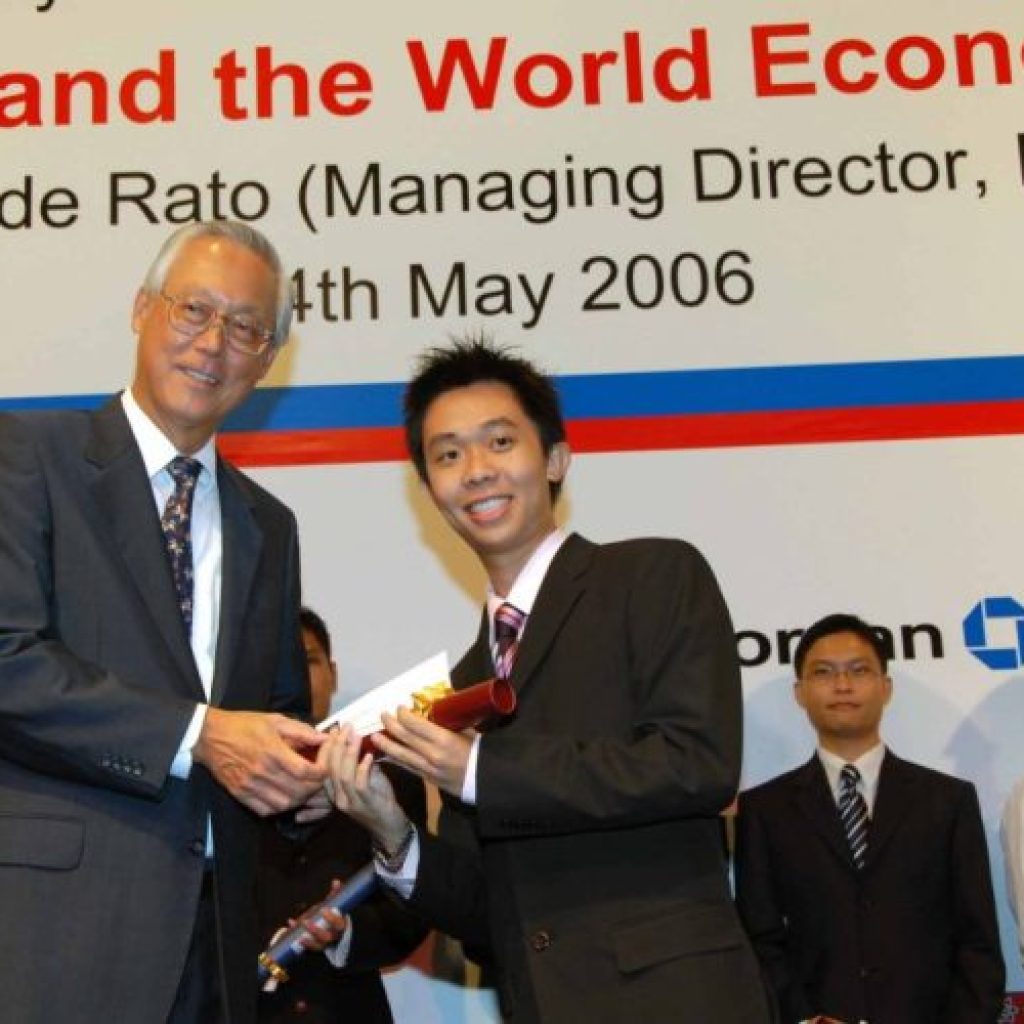
Melvin Koh is the founder tutor of ThatEconsTutor, specialising in JC H1 and H2 Economics tuition in Singapore. A former Monetary Authority of Singapore scholar, he graduated from the National University of Singapore with First Class Honours in Economics and topped his entire Economics Honours cohort, earning the Economic Society of Singapore Gold Medal. He was also placed on the NUS University Scholars Programme President’s Honour Roll, received six Dean’s List awards, and achieved distinctions in seven A Level subjects, including Economics S Paper, now known as H3 Economics.